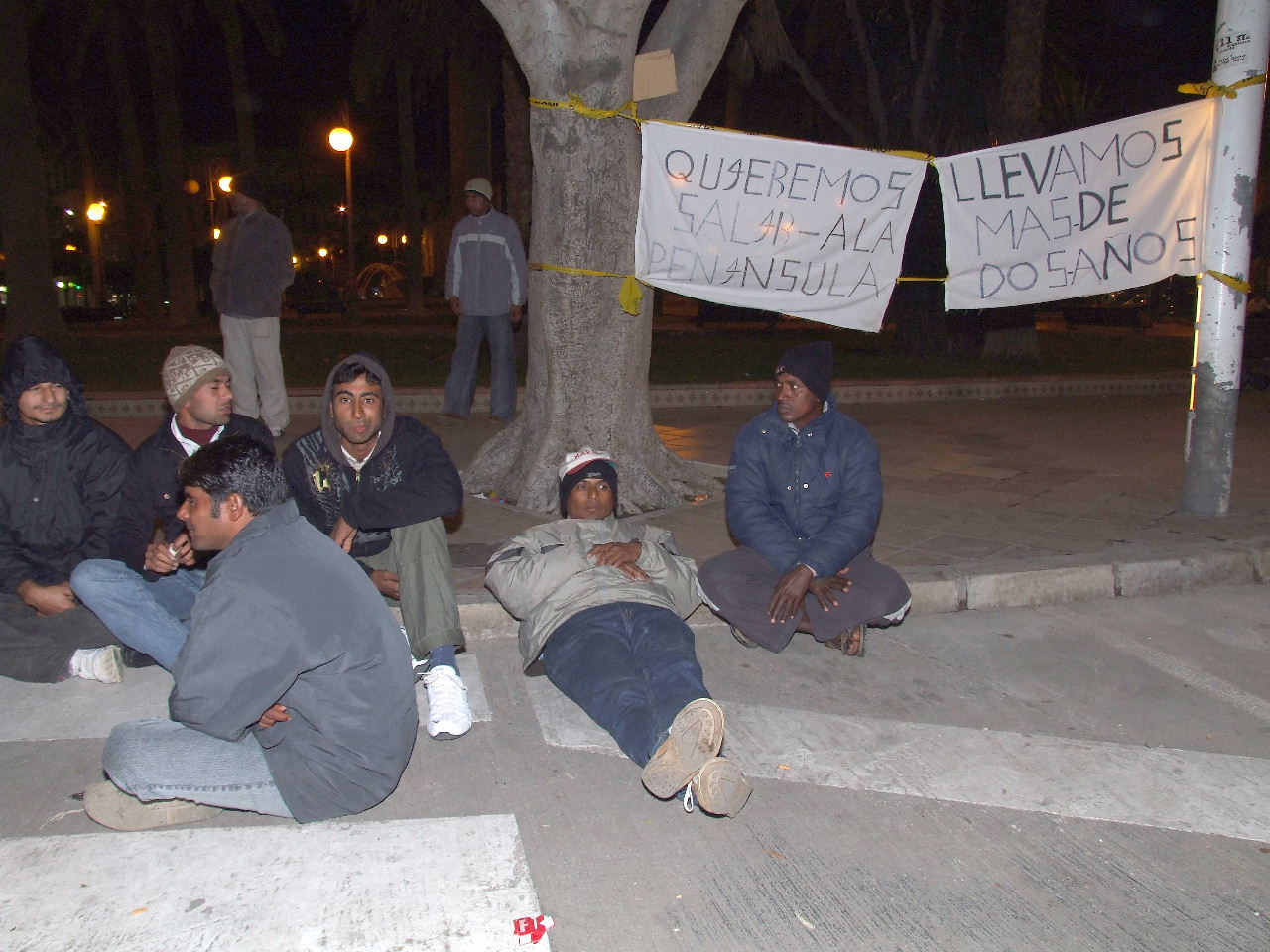
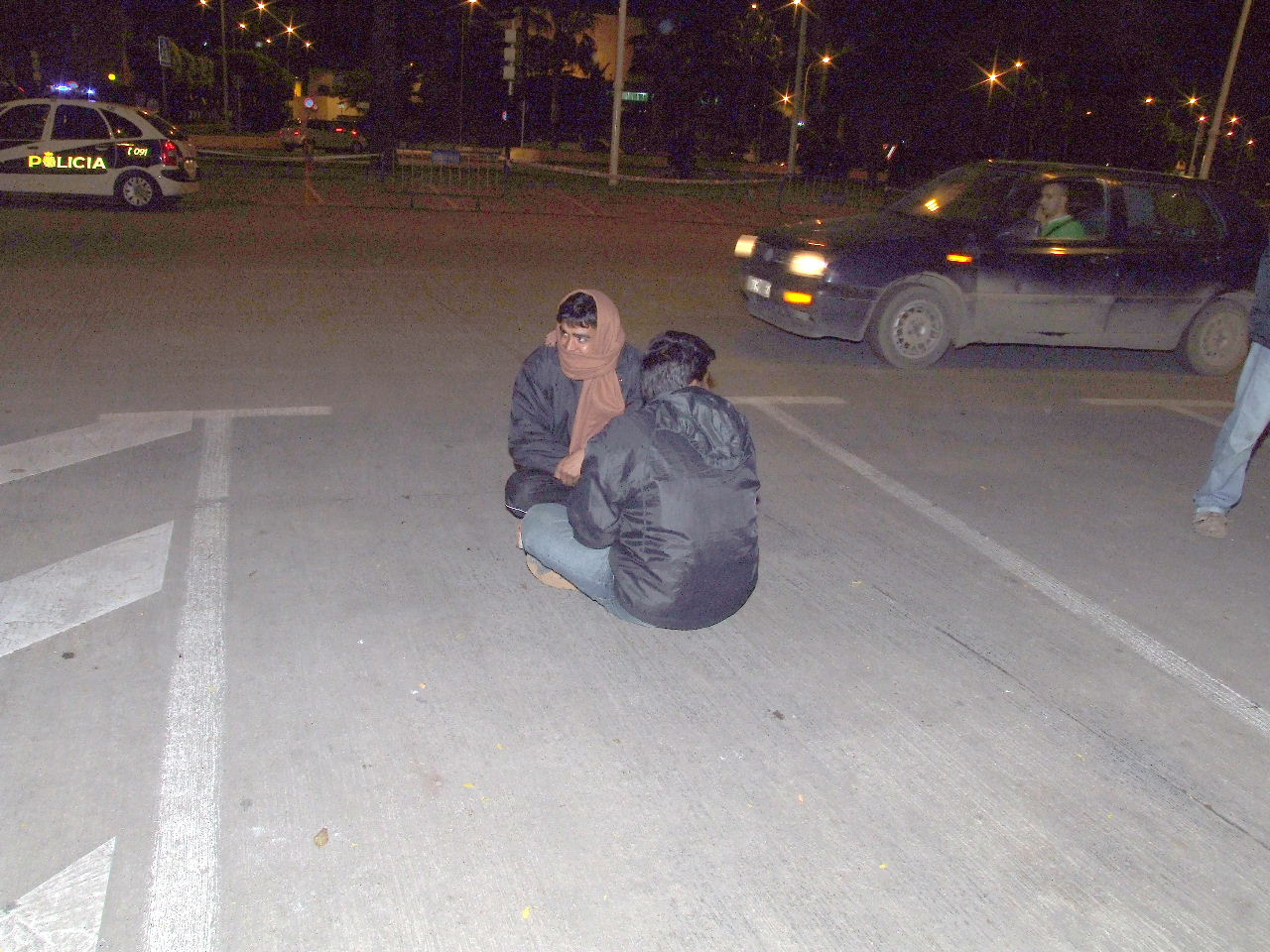
Durante el miércoles y jueves de la semana pasada la policía efectuó nuevas redadas en las que han sido detenidos entre veinte y treinta subsaharianos.
domingo, 17 de enero de 2010
ENTRE VEINTE Y TREINTA AFRICANOS HAN SIDO DETENIDOS DURANTE DOS DIAS DE REDADAS EN EL CETI
Durante el miércoles y jueves de la semana pasada la policía efectuó nuevas redadas en las que han sido detenidos entre veinte y treinta subsaharianos.
LOS 20 HINDUES Y PAKISTANIES TRASLADADOS A UN CIE LA SEMANA PASADA SERAN POSIBLEMENTE EXPULSADOS.
La semana pasada 20 Hindúes y Pakistaníes se presentaron voluntariamente en la Comisaría de Melilla para ser trasladados a un CIE de Madrid donde permanecerán detenidos durante 60 días.
viernes, 15 de enero de 2010
VIC no puede negar el empadronamiento a los inmigrantes pero en Melilla se viene haciendo desde hace años.
Polémica decisión del Ayuntamiento de Vic en el empadronamiento de extranjeros El art. 15 Ley de Bases de Régimen Local (LBRL) obliga a "Toda persona que viva en España" a inscribirse en el Padrón del municipio en el que resida habitualmente. La misma norma añade: "Quien viva en varios municipios deberá inscribirse únicamente en el que habite durante más tiempo al año". Al mismo tiempo, hay que recordar que el art. 6 de la Ley Orgánica sobre Derechos y Libertades de los Extranjeros en España y su integración social (Ley Orgánica de Extranjería o LOEX) recoge la obligación de los Ayuntamientos de incorporar al padrón a los extranjeros que tengan su domicilio habitual en el municipio; además están obligados a mantener actualizada la información relativa a los mismos. El art. 16 de la LBRL, en su redacción actual, señala que: "El Padrón municipal es el registro administrativo donde constan los vecinos de un municipio. Sus datos constituyen prueba de la residencia en el municipio y del domicilio habitual en el mismo. Las certificaciones que de dichos datos se expidan tendrán carácter de documento público y fehaciente para todos los efectos administrativos."(...) Según el art. 15 de la LBRL, "la condición de vecino se adquiere en el mismo momento de su inscripción en el Padrón" (art. 15 LBRL). Es importante tener en cuenta la redacción ofrecida por el texto vigente, pues hasta la reforma de la LBRL 7/85, por la Ley 4/96, de 10 de enero de 1996, se consideraban meramente domiciliados a los españoles menores de edad y a los extranjeros residentes habitualmente en el término municipal y que como tales figuren inscritos en el padrón municipal. En concreto, el artículo 16 original señalaba: "1. La condición de residente se adquiere en el momento de realizar la inscripción en el Padrón. Los residentes se clasifican en vecinos y domiciliados. 2. Son vecinos los españoles mayores de edad que residan habitualmente en el término municipal y figuren inscritos con tal carácter en el Padrón. 3. Son domiciliados los españoles menores de edad y los extranjeros residentes habitualmente en el término municipal y que como tales figuren inscritos en el Padrón municipal. (...)". Es decir, de forma consciente el legislador en el año 1996 anuló la diferenciación entre residentes, homogeneizó esta figura, calificando expresamente de "vecinos" a los extranjeros con domicilio habitual en un municipio. Ciertamente la homogeneización se produjo sin la atribución plena de derechos y obligaciones que contiene el art. 18 LBRL, puesto que su párrafo 2. señala: "2. La inscripción de los extranjeros en el padrón municipal no constituirá prueba de su residencia legal en España ni les atribuirá ningún derecho que no les confiera la legislación vigente, especialmente en materia de derechos y libertades de los extranjeros en España". Según la legislación vigente (en concreto el párrafo 2 del art. 16 de la LBRL), la inscripción padronal contendrá como obligatorios los siguientes datos: a) Nombre y apellidos; b) Sexo; c) Domicilio habitual; d) Nacionalidad; e) Lugar y fecha de nacimiento; f) Número de documento nacional de identidad o, tratándose de extranjeros: Número de la tarjeta de residencia en vigor, expedida por las autoridades españolas o, en su defecto, número del documento acreditativo de la identidad o del pasaporte en vigor expedido por las autoridades del país de procedencia; g) Certificado o título escolar o académico que se posea; h) Cuantos otros datos puedan ser necesarios para la elaboración del Censo Electoral, siempre que se garantice el respeto a los derechos fundamentales reconocidos en la Constitución" Por consiguiente, ninguna norma exige al extranjero el probar que su residencia en España es regular. Además la policía de extranjeros no es una competencia propia del Ayuntamiento Acreditado por tanto el domicilio habitual en el municipio y con la presentación de la tarjeta de residencia o pasaporte en vigor, el Ayuntamiento vendrá obligado a inscribirle en el Padrón Municipal adquiriendo de esta forma la cualidad de vecino del municipio. Por ello, la actuación municipal denegatoria de la inscripción padronal, a sabiendas de la injusticia de su resolución, incurriría en conducta tipificada y penada en el art. 404 CP como prevaricación administrativa. http://www.abogados.es/portalABOGADOS/blogs/paguelo/blogs.htmlLos polémicos criterios de empadronamiento en Vic
jueves, 17 de diciembre de 2009
jueves, 26 de noviembre de 2009
miércoles, 25 de noviembre de 2009
QUINCE DÍAS DE ACOSO A LOS RESIDENTES EN EL CETI DE MELILLA PROVOCAN UN ABANDONO MASIVO DE INMIGRANTES
Hace un par de horas se ha producido en el CETI de Melilla una nueva redada de la policía para detener a residentes del mismo y deportarlos.
viernes, 6 de noviembre de 2009
domingo, 20 de septiembre de 2009
DE NUEVO LA MUERTE EN EL MAR
domingo, 8 de marzo de 2009
DE MÉTODOS PREVENTIVOS Y MUERTES EJEMPLARIZANTES.
viernes, 30 de enero de 2009
LA LUCHA CONTRA LA POBREZA: OTRA MENTIRA DEL GOBIERNO DE MELILLA.
martes, 29 de julio de 2008
EXPULSION MASIVA EN MELILLA | MASS EXPULSIONS IN MELILLA
[Minors complain about their footwear.
The Director of Social Welfare claims they want NIKE shoes.]
Versión en inglés:
Tuesday, 29 July 2008
MASS EXPULSION FROM MELILLA
In the early hours of this morning security forces surrounded Melilla’s CETI in a mass deployment. At least 20 Subsaharan migrants and an unknown number of Algerians (which could be just over 40) were detained. According to early reports the Subsaharan migrants were from various countries, and the only thing linking them in common was that none of them had spent more than six months in the CETI. The Algerian nationals were all single men, most of whom had taken part in the hunger strike a few weeks ago.
Last week all the Algerian families in the CETI were transferred to the peninsula with a guarantee of safe passage.
With this operation the government is aiming once again to gain electoral statistics and to clear out the CETI which was overcrowded as a result of the continuous entries (estimated at about 3 to 6 a day), which continue despite the ‘humanitarian’ fence, the thugs on the other side and the government’s political and psychological propaganda which cover up its illegal practices wreaking havoc on the African continent.
In other news, around 30 children under the custody of Melilla’s Social Welfare Office (Consejería de Bienestar Social de Melilla) have run away from the refuge center for minors called “Fuerte de la Purísima.” These children try every night to escape the custody of the Consejería by climbing aboard boats in Melilla’s port. The youngest of them is 8 years old, and the oldest is 17. Most of them have been in Melilla for over two years, and they argue that they can no longer bear the ill-treatment they suffer and that some of their teachers have told them that they will not ever get their documentation in Melilla and it is better for them to go. The Director of the Social Welfare Office in Melilla continues to make frequent self-congratulatory statements about the low numbers of children currently in the center and asking for more money (yes, even more!) from the government to take care of them.
Furthermore, the Social Welfare Office continues not to accept the recommendations and reminders of legal obligations it has received from the Spanish Public Defender’s Officer, and continues to exercise its custody over the minors in a despotic manner which runs completely against the law as it stands.
lunes, 23 de junio de 2008
¿DONDE ESTAN LOS INMIGRANTES? | WHERE ARE THE MIGRANTS?
[Wounded migrants in Nador after suffering
harsh repression by the Spanish-Moroccan forces.
Both governments deny the facts.
Days later (in 2005) the killings started.]

[ The Border at Beni Enzar]
Versión en inglés:
Monday, 23 June 2008
WHERE ARE THE MIGRANTS?
On the night of Sunday (into early on Monday), a small group of migrants tried out of despair to enter Melilla. The attempt took place in the same place as the previous one, at the border at Beni Enzar. According to official statements, no migrants were successful in crossing the border.
Today the local and national press collected the official statements about yesterday’s entry attempt, to distort everything that actually happened: according to them, 39 people have disappeared, there people admitted to hospital didn’t number six, the wounded policemen didn’t number four, and the African were apparently “strongly armed” with sticks and stones.
This is the same border where Subsaharan Africans and Asians pass relatively easily if they pay 2500 or 3000 euro, or if you’re a slave in the smuggling industry, or paying 50 euro if you’re Moroccan – but it becomes impossible and excessively violent if you’re black and poor.
This is reminiscent of the day in 2005 that the tragic events of the Rio Nano took place, during which many tens of African faced the wrath of the Moroccan and Spanish forces and suffered all sorts of abuse, which were denied at first and admitted later; we are faced with similar events, and a denial and falsification of the facts. The Delegation of the Government is outlining a dangerous roadmap that leads to nowhere.
domingo, 18 de mayo de 2008
SEPTIMO DIA DE HUELGA DE HAMBRE - SEVENTH DAY ON HUNGER STRIKE
Traducción al inglés:
Today is the seventh day that the Indians and Algerians held for over two years at the CETI in Melilla have been on hunger strike. The physical state of the hunger-strikers is deteriorating by the minute and no-one seems to care. Emergency medics attended to six people yesterday and another one today [see video]. The coming and going of ambulances from the Plaza de España is nonstop.
Last week they formally submitted a written document at the Delegation of the Government asking for an interview to examine the possibility of a way out of this impasse, but there has not yet been any response from the institutions of state.
The hunger-strikers, despite their physical frailty, are showing great determination and remain steadfast that they will not return to the CETI; they declare that they would rather die of hunger in the Plaza de España than return to their earlier situation.
PRODEIN