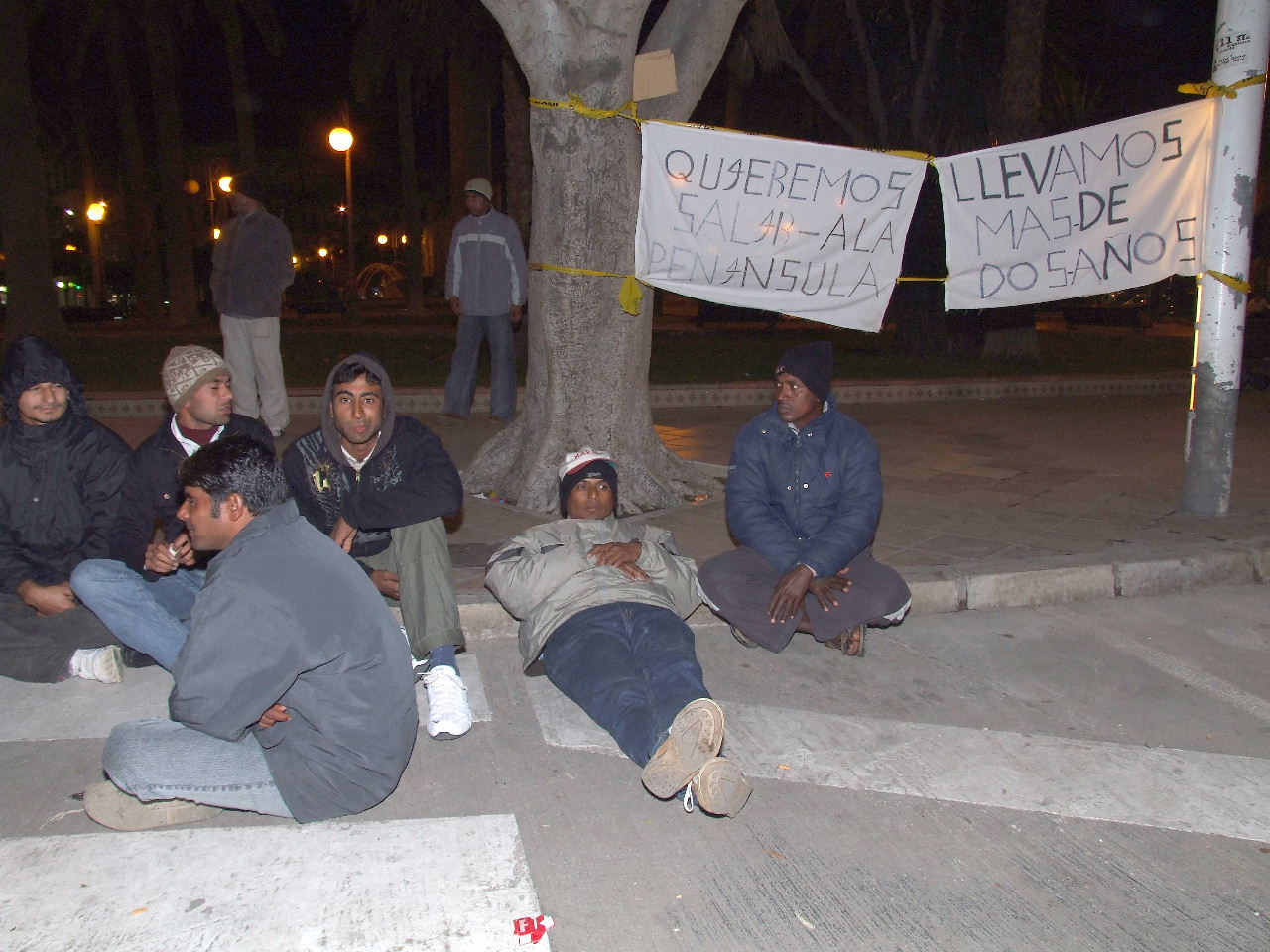
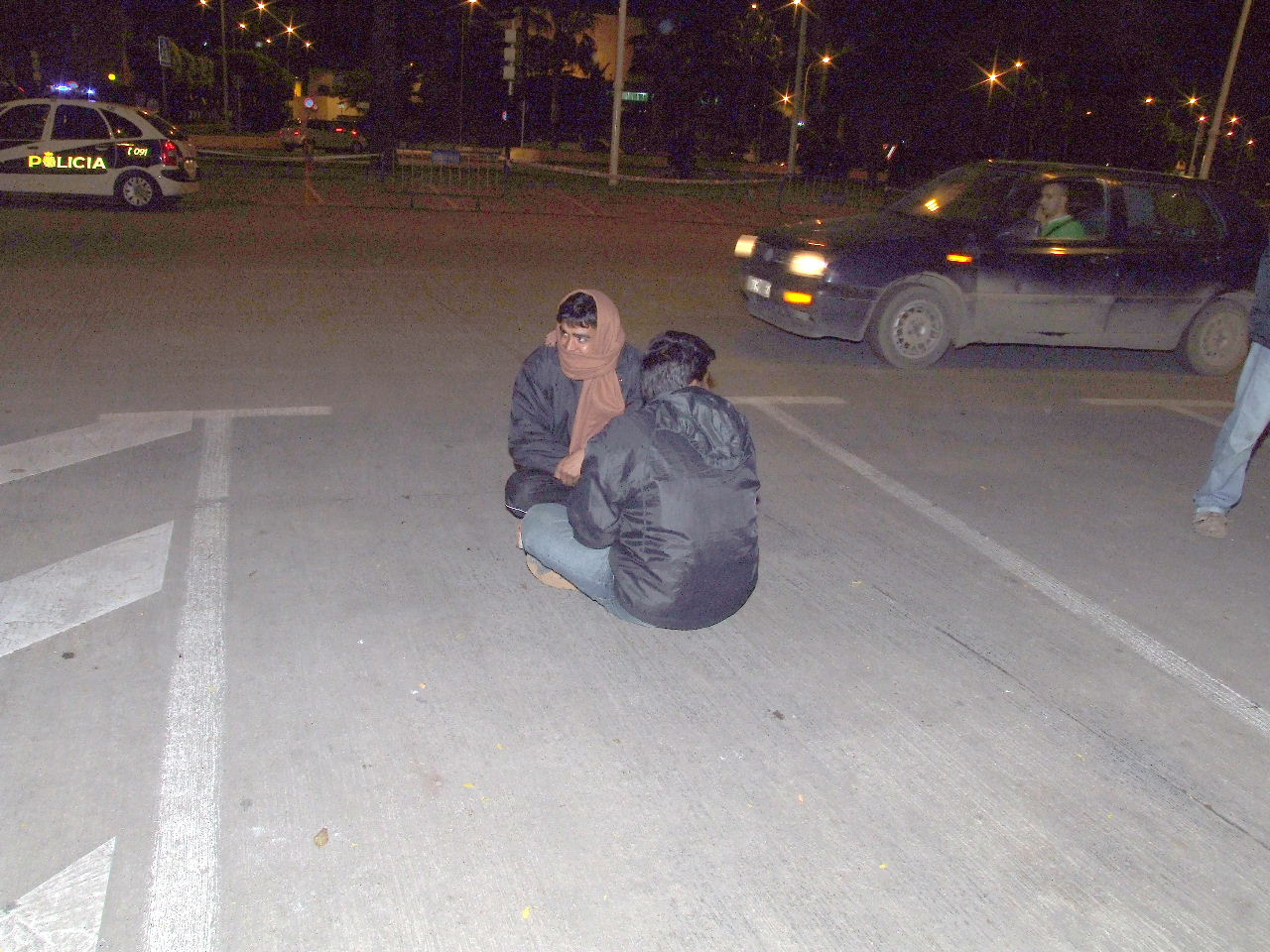
Amina tiene 25 años y es de Senegal. Tuvo que dejar a su hija de cinco años en su país para comenzar su viaje hacia Europa en busca de una vida mejor. Es la única mujer del grupo de inmigrantes subsaharianos que sobreviven en el monte Gurugú, en Marruecos, a la espera de una oportunidad para poder saltar la valla que les separa de Melilla. Amina lo intentó una vez, pero fracasó. Ella y el resto de inmigrantes, entre los cuales hay menores, denuncian violencia y maltrato por parte de la policía y el ejército marroquí.
© Pedro ARMESTRE/Susana HIDALGO
Para ver el vídeo pincha Aquí: http://vimeopro.com/calamar2/1/video/54846023
jueves, 14 de marzo de 2013
20121130-MARRUECOS-ESPAÑA-FRONTERA-INMIGRACION-AMINA-PA-SH
martes, 15 de febrero de 2011
martes, 16 de marzo de 2010
INQUIETANTE PORTADA DEL DIARIO MARROQUÍ "TEL QUEL" EN LA QUE APARECE HICHAM BOUCHTI.
miércoles, 5 de agosto de 2009
POSICIONES DE ESPAÑA Y FRANCIA FRENTE A LOS EXCESOS DE LA DICTADURA MARROQUI
miércoles, 3 de junio de 2009
EL CASO DE HICHAM BOUCHTI.
Nacido en 1978 en la ciudad de Oujda (Marruecos) Hicham ingresó muy joven en las Fuerzas Auxiliares (Mehannis) donde llegó a tener la graduación de sargento. Hicham también perteneció al servicio de información del ejercito marroquí, muy relacionado con las distintas agencias de la policía política marroquí.
La suerte de este joven cambió el día que denunció a uno de sus generales por presunto tráfico de armas con Argelia… El resultado de su denuncia fue que dio con sus huesos en la cárcel durante dos años. En ese período carcelario realizó declaraciones a la prensa marroquí en las cuales facilitó informaciones que supuestamente conocía por su trabajo en los servicios secretos. Igualmente denunció que estaba sufriendo periódicamente torturas en la cárcel de Temara (Cárcel secreta donde se practican habitualmente torturas a presos políticos: Saharauis, otros procedentes de Guantánamo, radicales religiosos marroquíes…)
Al cumplir su condena pasó la frontera de Melilla y solicitó asilo político el día 25-10-2005. Poco después fue trasladado a Madrid.
Una vez en Madrid, la policía política marroquí se puso en contacto con él y le comunicaron que la suerte que correría su familia en Marruecos dependería de su colaboración en facilitarles información sobre el periodista Alí Mrabet.
Hicham denunció tanto en una comisaría de policía como públicamente estos hechos pero pocos días después volvió a recibir la siniestra visita de los servicios secretos marroquíes que: amenazando de nuevo a su familia, le obligaron a trasladarse a Melilla con el fin de mantener una entrevista con un alto funcionario marroquí.
Hicham llegó a Melilla en barco el día 25-06-2006. Según cuenta le estaban esperando tres agentes marroquíes que le introdujeron a la fuerza en un coche y lo trasladaron a Marruecos perdiendo así la protección como solicitante de asilo en España. Inmediatamente fue trasladado de nuevo a la cárcel de Temara, siendo acusado de haber trabajado para el CNI, de haber facilitado informaciones secretas a España y de haber puesto en entredicho la imagen de Marruecos y su Rey.
Pasado un mes lo trasladaron al Hotel Hilton de Rabat, le pusieron un traje y le hicieron firmar un cuestionario. Después entraron dos fotógrafos y le hicieron fotos. Terminadas las fotos lo volvieron a la cárcel de Temara y ,una semana después, en toda la prensa marroquí apareció un artículo con sus fotos en el que supuestamente declaraba que había vuelto a Marruecos voluntariamente y que el Rey le había perdonado, por lo tanto, se reintegraba a su puesto en las Fuerzas Auxiliares marroquíes.
La realidad es que permaneció de nuevo más de dos años en distintas cárceles de Marruecos, protagonizó varias huelgas de hambre y sufrió periódicamente traslados a Temara donde era de nuevo torturado.
Un documento expedido en la cárcel de Berkane certifica su salida de prisión con fecha 30 de agosto de 2008. No obstante fue trasladado a su casa en Oujda donde permaneció en arresto domiciliario hasta que una mañana logró burlar la vigilancia policial -vestido de mujer- y escapó de nuevo a Melilla donde ingresó en el CETI.
Un mes después le han comunicado la denegación de su solicitud de asilo y lo han expulsado del CETI de Melilla dejándolo en la calle y sin ninguna protección.
Desde el lunes 01-06-2009 Hicham ha quedado a merced de una nueva intervención ilegal de la policía política marroquí en suelo español, lo que nos hace temer, de forma inminente, incluso por su vida.
domingo, 3 de mayo de 2009
NUEVOS CARGOS CONTRA CHAKIB EL KHAYARI Y COMUNICADO DE HRW
Morocco: New Charges Against Detained Activist (Washington, DC) - The continuing detention of Chekib el-Khayari shows the stark limits to Morocco's tolerance for criticism, Human Rights Watch said today. The human rights activist and whistleblower from the northern city of Nador has been in pretrial detention for more than 10 weeks. On April 23, 2009, el-Khayari appeared before an investigating judge, Jamal Serhane, for the first substantive hearing since his arrest on February 18. At the hearing, Khayari defended himself against charges that he had "gravely offended" Moroccan state institutions by criticizing lax drug interdiction policies. At this hearing, he also learned that the prosecutor had formulated three new charges against him, related to minor infractions of customs and currency regulations that date to 2006. "It's pretty clear that the new charges against el-Khayari appear to be one more attempt to silence a critic on politically sensitive issues, and to intimidate other activists," said Sarah Leah Whitson, Middle East and North Africa director at Human Rights Watch. "El-Khayari's prosecution shows that despite Morocco's reputation for open debate and a thriving civil society, the authorities are still ready to imprison activists who cross certain red lines." Before his arrest, el-Khayari had made numerous statements to the international media and in conferences in Europe, questioning the diligence of Moroccan authorities in suppressing the smuggling of illegal drugs from northern Morocco to Europe. El-Khayari is also an activist on behalf of Amazigh (Berber) rights. He has criticized mistreatment by Moroccan security forces of migrants from other countries who are trying to enter Europe clandestinely, and of Moroccan citizens by both Moroccan and Spanish security forces at the nearby frontier with the Spanish enclave of Melilla. El-Khayari's lawyers said they learned of the new charges only minutes before the hearing got under way in the Casablanca Court of First Instance. The charges relate to el-Khayari's handling of €225 (US$288) that the Spanish daily El País had paid him for an essay he contributed to the issue of July 4, 2006. He is alleged to have opened a bank account in Melilla to deposit the check from El País, and later to have withdrawn the money, without using a Moroccan bank as an intermediary or informing Morocco's Office of Currency Exchange (le Bureau des changes). The prosecution alleges that these transactions violated Moroccan laws governing the opening of bank accounts abroad by Moroccans residing in Morocco, and the transfer by Moroccans of currency into Morocco. Violations are subject to penalties of up to five years in prison. "Whether or not el-Khayari actually violated these currency regulations, the decision to charge him at this late date and for such a small amount only reinforces the impression of a politically motivated prosecution," said Whitson. Upon completing his investigation, Judge Serhane is to recommend whether to refer the case to trial and, if so, finalize the charge sheet. He has refused to release el-Khayari pending trial. However, the court will be required to free el-Khayari provisionally by May 21 if he has not yet been tried, since Moroccan law limits pretrial detention to three months when the charges relate to minor offenses (délits), as they do in this case. The charge of "gravely offending state institutions" under Article 263 and Article 265 of the Penal Code carries a penalty of one month to one year in prison and a fine of 1200 to 5000 dirhams (US$144 to US$600). At the April 23 hearing, el-Khayari contended that he had not criticized state institutions as such, but only state agents who were not diligently enforcing drug interdiction laws. Regardless of the facts in this case, laws that criminalize and provide prison terms for "gravely offending state institutions" are incompatible with international law governing the right to freedom of expression, which stress in particular the need to protect the freedom to criticize politicians and state authorities. Judge Serhane has allowed el-Khayari's lawyers access to the complete case file after initially refusing to provide them with parts of it. However, in a departure from standard practice, he has allowed them to consult it only at the courthouse, and has not permitted them to make photocopies.
miércoles, 15 de abril de 2009
CONCENTRACION FRENTE A LA EMBAJADA DE MARRUECOS EN MADRID ¡¡¡ACUDE!!!
Comité de Apoyo de las víctimas de violaciones de Derechos Humanos en Marruecos Llamamiento Marruecos ha vivido y sigue viviendo estos últimos meses, una ola de represión muy amplia que recuerda a la época sangrienta de Hassan II. (calle Serrano 179) El domingo 19 de abril a partir de las 12 horas. Bajo el lema “Juntos contra las violaciones humanos en Marruecos” MADRID Comité de Apoyo de las víctimas de violaciones de Derechos Humanos en Marruecos ---------------------- لجنة مناهضة الانتهاكات لحقوق الانسان بالمغرب مدريد نداء عقاب جماعي، اعتقالات بالجملة، جياع يصرخون، عمال يحترقون، معطلون في الشوارع ، طلبة وإعلاميون و نشطاء حقوقيون يحاكمون... انتهاكات تثبت بالسياط إعادة النظام إنتاجه لذاته في جوهريتها الاستبدادية وبنياتها القهرية و آلياتها القمعية. حقيقة تتخفى خلف الأقنعة الشعاراتية لما ينعت بالعهد الجديد و الانتقال الديمقراطي و حقوق الإنسان، إلى آخر قائمة الشعارات الزائفة.من معاناة ضحايا شعبنا في قلاع القمع دهاليز السجون، وساحات القتال في الجامعة والشارع تعلن لجنة مناهضة الانتهاكات لحقوق الانسان بالمغرب / مدريد، المشكلة من الفعاليات والقوى الديمقراطية والمدنية والاعلامية . للرأي العام الدولي والوطني الحرة عن تنظيم وقفة احتجاجية أمام السفارة المغربية يوم 19 أبريل2009 على الساعة 12 زوالا . لا للإعتقالات، لا للقمع، لا لنهب خيرات البلاد نعم للحرية نعم للكرامة لجنة مناهضة الانتهاكات لحقوق الانسان بالمغرب مدريد
Desde las intervenciones brutales de la policía Marroquí contra las protestas de los parados en sus luchas en defensa del derecho del trabajo, donde la asociación de diplomados en paro ha sido reprimida en diferentes puntos, Alhucemas, Nador, Rabat, Sidi Ifni …hasta las detenciones , condenas, huelgas de hambre, donde en Meknes solo por defender y reclamar el respeto a la identidad Amazigh del pueblo Marroquí , se distribuido 32 años de cárcel , a los activistas del movimiento cultural Amazigh.
Esto sin olvidar la represión sufrida de parte de los trabajadores , el movimiento estudiantil en las Universidades de Fez, Meknes, Oujda , Marrakech, Taza , la prensa y el movimiento de derechos humanos , además de la situación vivida de parte de loa inmigrantes subsaharianos a quien se reprime el derecho de circular libremente.
Contra la injusticia ocurrida en Marruecos, y de apoyo y solidaridad con las luchas del pueblo por sus derechos básicos, llamamos a Tod@s l@s defensores de derechos humanos en Madrid a participar en la concentración frente a la embajada de Marruecos
مسلسل من الانتهاكات الجسيمة الممنهجة في حق مسحوقي بلاد المخزن.من قمع للجماهير الشعبية : سيدي ايفنى - بولمان دادس – تماسينت – مراكش - ... ، واعتقال الطلبة : الرشيدية – مكناس – اكادير – تازة – فاس - مراكش - وجدة ...، وتحويل المعطلين الى مختبر المخزن للهروات لقياس حجم الغضب الشعبي واستعداداته لاي انتفاضة شعببة ... وكبح الاصوات الحرة المرتبطة بقضايا الشعب من نشطاء الحقوقيين والصحفيين....
viernes, 20 de marzo de 2009
Marruecos expulsa a un fotógrafo español: RAFAEL MARCHANTE
Viva la democracia Marroquí y las subvenciones que recibe de España el gobierno de Rabat para ayuda al desarrollo... (al desarrollo y mantenimiento de las brutalidades fascistas del Gobierno Marroquí ¡¡Claro¡¡).